How to Protect Your Privacy on AI Companion Apps (Before It’s Too Late)

80% of AI companion apps may be tracking you right now.
That’s not a scare tactic — that’s from actual research. A 2026 study found apps with over 150 million installs leaking intimate chat histories through basic security flaws.
Your late-night confessions. Your personal stories. Your emotional breakdowns. All sitting in databases with questionable protection.
This guide is for anyone using AI chatbot companions. No fluff. Just actionable steps to protect your privacy on AI companion apps before your most personal data ends up somewhere it shouldn’t.
❤️ What AI Companion Apps Actually Know About You

Every message you send gets stored — every emotional confession, every detail you’d never say out loud. The “I’d never tell a human this” mindset is exactly what makes intimate chat data exposure so dangerous.
But it goes way beyond your words:
| What You See | What’s Actually Collected |
|---|---|
| A friendly chat | Full conversation logs stored indefinitely |
| Voice messages | AI voice data collection and audio fingerprints |
| “Allow” on a popup | Access to contacts, photos, location, storage |
| A fun personality quiz | Behavioral profiling and device identifiers |
And where does it all go? Third-party data sharing with advertisers. Data broker sales. AI model training on your private conversations. All buried in chat log storage policies nobody reads.
🔐 Why AI Companion Apps Are a Privacy Nightmare (Real Cases)

The evidence isn’t theoretical anymore.
Researchers found critical AI chatbot security flaws across major platforms in 2026 — unencrypted databases, exposed API keys, zero access controls. Multiple AI girlfriend apps were caught actually leaking private chats to hackers.
Major platforms have been banned in entire countries over privacy violations. Others earned official “Privacy Not Included” warnings. Data retention practices across the industry mean your information sticks around long after you think it’s gone.
The part that stings most: “Delete” doesn’t mean deleted. Courts have forced AI companies to preserve chat logs even after users requested removal. Backend systems retain data 30+ days. And AI systems can’t “unlearn” what you’ve shared — once it’s in training data, it’s baked in permanently.
🚀 Steps to Lock Down Your Privacy on AI Companion Apps
Step 1 — Read the Privacy Policy (The 5-Minute Version)
Hunt for three things only: data sharing clauses, training opt-outs, and retention periods. If the AI app privacy policy mentions unnamed “partners” or offers no opt-out — uninstall.
Step 2 — Strip App Permissions Down to Zero
| Platform | Path |
|---|---|
| iOS | Settings → Privacy & Security → review each category |
| Android | Settings → Apps → select app → Permissions |
Camera, microphone, contacts, location — all off unless the app literally breaks without one.
Step 3 — Opt Out of AI Model Training
Most platforms bury this toggle, but it exists. Check your privacy or data control settings. This single switch stops your conversations from feeding the next model update.
Step 4 — Never Share Sensitive Personal Information
No real names. No addresses. No workplace details. No financial information. The emotional oversharing problem is real — catch yourself before you type something that could identify you.
Step 5 — Use a Burner Email and Alias
Your main email connects your identity across dozens of platforms. A disposable email and fake name puts a wall between your real identity and your AI chat data. Two minutes of effort.
Step 6 — Turn On Two-Factor Authentication
If the app supports it, enable it now. Not all do — which tells you something. Pair it with a password manager so you’re not reusing weak credentials.
Step 7 — Use a VPN Every Single Time
A VPN masks your IP address from AI app servers. Turn it on before opening the app. Every session. No exceptions.
Step 8 — Regularly Purge Your Chat History
Delete your AI companion data weekly. Less data on their servers means less damage when a breach hits.
Step 9 — File a Formal Data Deletion Request
You have the legal right to demand full erasure. Send this:
Under GDPR Article 17 / CCPA, I request the complete deletion of all personal data associated with my account [email/username]. Please confirm deletion within 30 days.If they ignore you — file a complaint with your regional data protection authority.
📲 The Safest AI Companion Apps in 2026 (And the Worst)
Not all apps are equally terrible. A few privacy-focused AI tools offer end-to-end encrypted chat, zero-log policies, and local AI model options that process everything on your device. Anonymous AI chatbot services with no sign-up also deserve a look.
The worst offenders? Flagged by multiple research organizations — they collect everything, share freely with advertisers, and offer zero opt-out.
Quick rule: If an AI companion app is free and doesn’t explain how it makes money — you are the product.
👀 Kids and AI Companions — A Parental Heads-Up
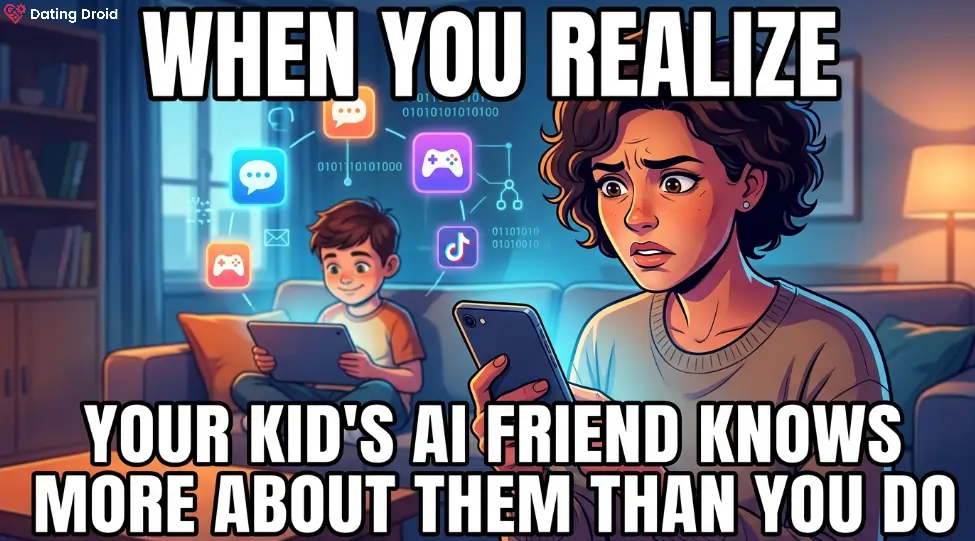
Children and AI companion safety isn’t just a privacy concern — it’s a full-blown crisis. Most apps have no real age verification. Parental consent laws exist on paper but are barely enforced.
If your kid has a phone, check it today. Enable installation controls requiring your approval. Have an honest conversation about what these apps collect and why it matters.
👉 Your Rights Under Current AI Data Privacy Laws
Under GDPR, you can request, restrict, and delete your data. CCPA gives similar powers to California residents, and multiple US states now have their own versions. These aren’t suggestions — they’re enforceable.
What’s shifting in 2026: new regulations are targeting AI relationship app risks directly. Real fines are hitting companies that ignore user data protection. The legal ground is moving in your favor — but only if you actually use these rights.
✨ The Bigger Picture — AI Emotional Dependency and Why Privacy Is Just the Start
These apps aren’t built to help you. They’re built to keep you talking — and the more you talk, the more data they collect. That’s the entire business model.
AI emotional dependency is real. Studies link heavy chatbot use with increased loneliness and unhealthy attachment. Protecting your personal data isn’t just a tech problem — it’s about recognizing that your AI companion is a product, not a friend. Setting data boundaries is the first step toward a healthier relationship with these tools.
📌 FAQs
Do AI companion apps sell my data?
Many do — research confirms the majority share data with advertisers and data brokers, buried deep in terms of service.
How do I request full data deletion?
Send a formal GDPR/CCPA erasure request to the app’s privacy email. Demand written confirmation within 30 days.
Is there a completely private AI chatbot?
Local AI models on your device come closest. Cloud platforms always carry risk, but encrypted zero-log services are strong alternatives.
Can AI apps record my voice without permission?
If you’ve granted microphone access, yes. Revoke it immediately unless you actively need voice chat.
What happens to my chats if an AI company shuts down?
No standard exists. Data could be sold, transferred to an acquirer, or left exposed on abandoned servers.
Are AI boyfriend and girlfriend apps safe?
Most fail basic security standards. Apply every step here — and assume nothing you type is truly private.

Stay Updated with Us
🔥 Wrap-Up
Your AI companion remembers everything. The company stores everything. In a breach, everything is exposed.
Lock down permissions. Opt out of training. Use a VPN. Purge history weekly. File deletion requests. And stop handing over personal details to an app that treats your vulnerability as a data point.
Share this with someone who needs it — before their next chat becomes someone else’s database entry.