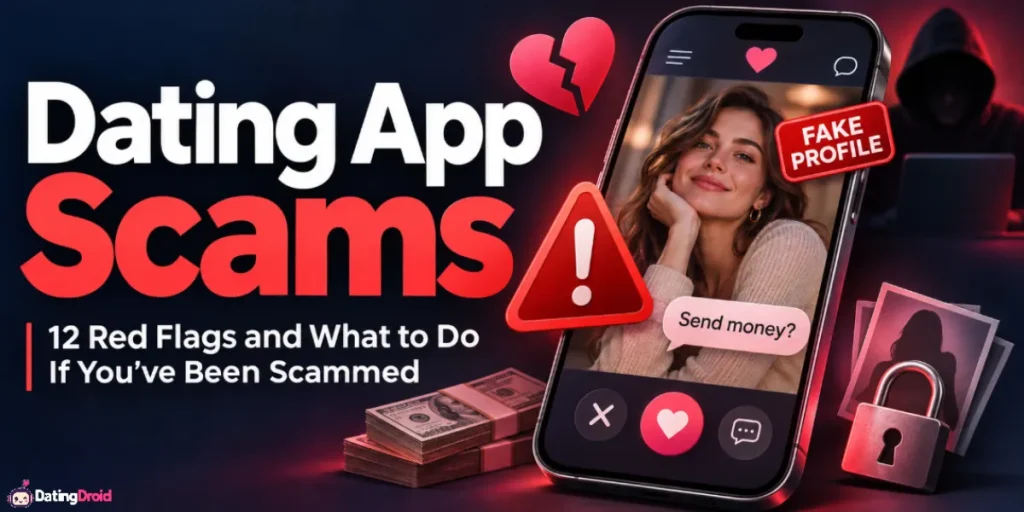
Dating App Scams (2026): 12 Red Flags and What to Do If You’ve Been Scammed

The short answer
The number one rule: never send money, gift cards, crypto or a bank transfer to someone you haven't met in person.
Almost every dating app scam ends with a request for money, however long it takes to get there. If someone you met online asks for money, for any reason, it's a scam until you've proven otherwise.
How big is the problem?
Bigger than most people think. According to FTC data, Americans reported losing $1.16 billion to romance scams in just the first nine months of 2025. That came from 55,604 reports, 22% more than the same period of 2024. In the third quarter of 2025, the median loss was $2,218.
And those are only the people who reported it. Plenty of people never do, because they're embarrassed.
If it's happened to you, you're far from alone, and it doesn't mean you're stupid. These scams are run by organized groups who do this full-time.
How a dating app scam usually works?
Most romance scams follow the same pattern:
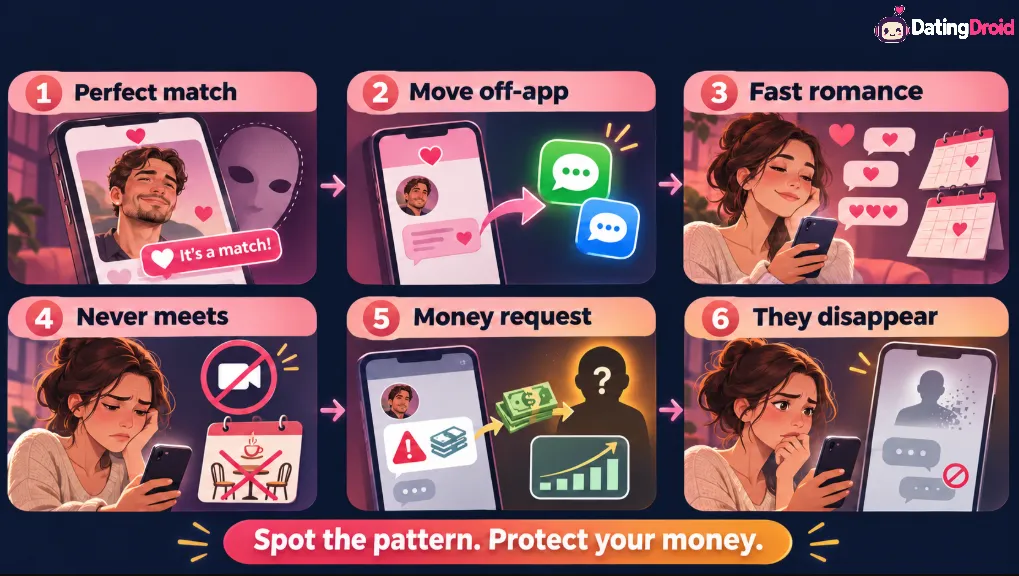
- The match. A great-looking profile, often with a job that explains why they travel or can't meet: military, oil rig, doctor overseas, engineer on a contract abroad.
- The move. Within a day or two, they ask to switch to WhatsApp, Telegram or text. That gets you away from the app's scam filters and reporting tools.
- The bond. Lots of attention, fast. Daily messages, “good morning” texts, talk of a future together. This can go on for weeks or months.
- The excuse. Every plan to meet or video call falls through: bad connection, broken camera, last-minute work trip.
- The ask. A sudden emergency, a fee, a ticket to visit you, or an “amazing” investment they want to share. Small at first, then bigger.
- The disappearing act. Once you stop paying, they vanish, or they come back with a new story.
The most common dating app scams
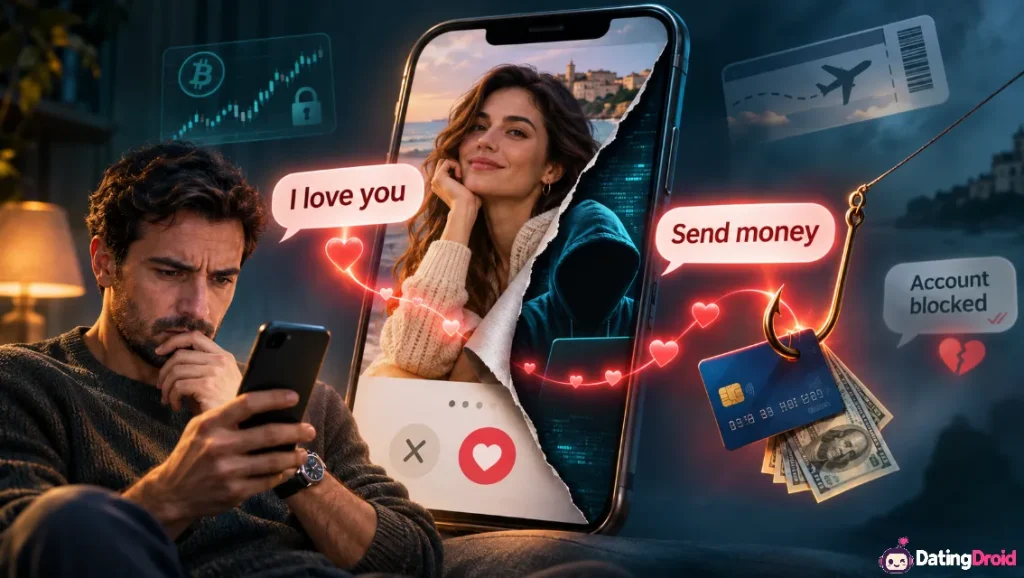
The military romance scam
They say they're a soldier deployed overseas, which explains why they can't meet or video call.
Eventually they need money for leave papers, a flight home, a “care package” fee or to get their belongings shipped.
Real service members don't need you to pay for any of that.
The crypto investment scam
This one starts as romance and turns into finance. Your match mentions they've done really well trading crypto or gold, then offers to show you how.
You're sent to a slick app or website that shows your “profits” growing, until you try to withdraw and get hit with fees, taxes or a frozen account.
The FTC found that about 18% of romance scam reports in 2022 involved an investment pitch like this.
The emergency
They, or someone close to them, are suddenly sick, hurt, stuck at an airport or in jail. They need money now, and they're so embarrassed to ask.
The FTC found this was the most common lie in 2022 romance scam reports, at about 24%. Sad stories are usually scam stories.
Sextortion
The chat turns sexual fast and they send explicit photos, then ask for yours. Once you send them, they threaten to share them with your family, friends or employer unless you pay.
Sometimes they never needed your photos at all and just claim to have them. Don't pay. Paying almost always leads to more demands.
The fake “verification” link
Common on hookup apps and ad boards like Doublelist. A match says they need you to “verify you're real” or get a “safety ID” before meeting, and sends a link to another site.
That site takes your card details and signs you up for expensive subscriptions. No real person needs you to verify on a third-party site.
The verification code scam
They ask you to read back a code that's just been texted to you, “to prove you're not a bot.” That code is actually for your account on another service, like your email or a phone number they want to set up in your name. Never share a code sent to your phone.
Sugar daddy and sugar mommy scams
The “sugar daddy” promises a weekly allowance, then asks you to pay a small fee first to “unlock” the payment or prove you're serious. Or they send a check or a transfer, ask you to send part of it back, and the original payment bounces later. Real money never needs you to pay to receive it.
The travel ticket
They're desperate to meet you, but need help paying for a flight, a visa or a passport. Once you pay, something else goes wrong and they need more.
Bots that sell you something
A match who replies instantly, sounds a bit off, and quickly sends you a link to their “private page”, a cam site or a paid app. That's a bot or a marketer, not a person who's into you.
Paid invites and “guaranteed approval”
Some people sell invites or promise guaranteed approval for exclusive apps like Raya. Applying to Raya is free, and nobody outside the company can promise you get in. Anyone charging for access is scamming you.
AI-generated photos and catfishing
Scammers increasingly use AI-generated photos that won't show up in a reverse image search, because they've never been posted anywhere else.
Look for unusual details such as mismatched earrings, distorted backgrounds or inconsistent facial features.
However, AI-generated images can look completely realistic, so visual clues alone aren't enough to identify a fake dating profile. AI companion apps have their own scams too.
See our guide to AI girlfriend scams.
The recovery scam
This one targets people who've already been scammed. Someone contacts you claiming to be a lawyer, investigator or “crypto recovery” expert who can get your money back, for an upfront fee. They can't. Government agencies don't charge to help you, and real recovery firms don't cold-message victims.
12 red flags of a dating app scammer
One of these on its own might be nothing. Two or three together, and you should slow right down.
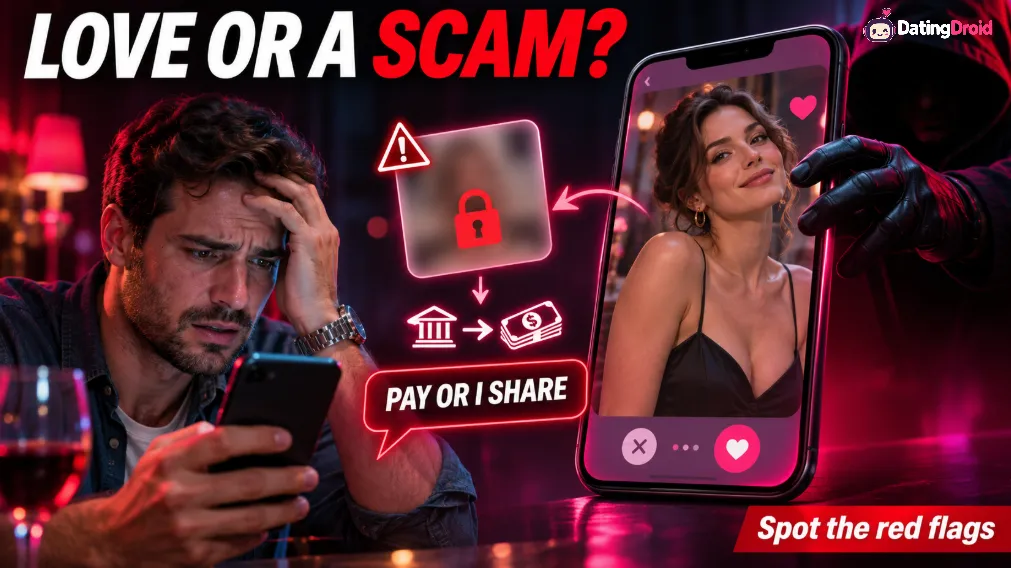
- They ask for money, in any form, for any reason. This is the big one.
- They want to leave the app fast, often to WhatsApp, Telegram or Google Chat, within the first day or two.
- They can never video call. The camera's broken, the signal's bad, or they're on base.
- Plans to meet always fall through at the last minute.
- It moves too fast. “I've never felt this way before” after a week of texting.
- Their job keeps them far away: military overseas, offshore oil rig, international doctor or engineer.
- They mention investing or crypto and offer to teach you.
- Their story doesn't add up. Details about where they live, their age or their job change over time.
- Their photos look too perfect, like a model shoot, or there are only two or three.
- Their writing feels off, with copy-paste replies, odd grammar for someone who says they're local, or answers that don't match your question.
- They ask you to keep it secret from friends and family.
- They send you a link to verify, sign up, invest or see their “private” photos.
How to spot a fake dating profile?
Before you get too invested, run through these checks:
What to do if you've been scammed
If you've already sent money, move fast. The sooner you act, the better your chance of stopping a payment.
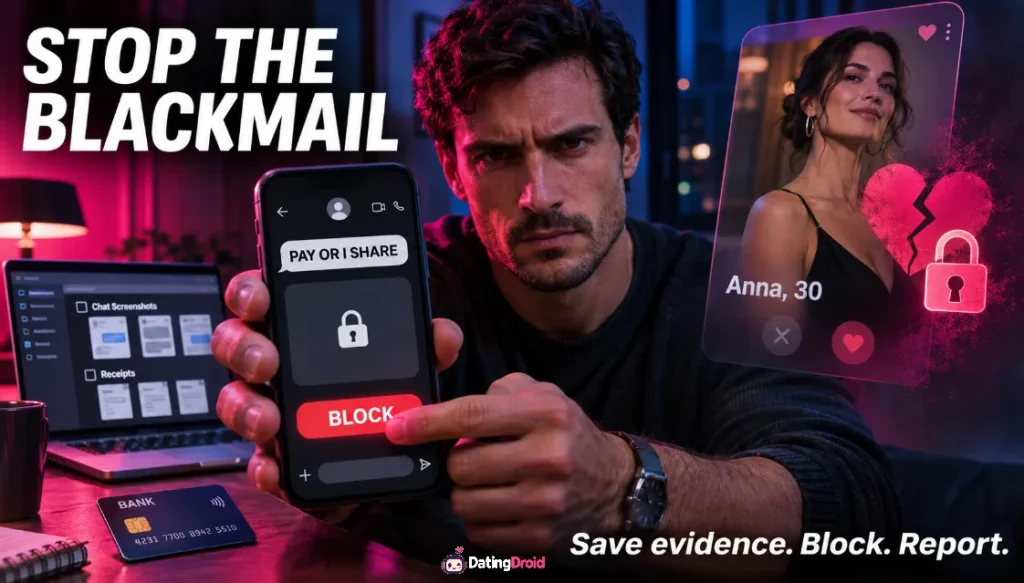
If someone is threatening to share your photos
Don't pay, and stop replying. Save the messages and their profile, report the account to the app and the platform they're threatening to post on, and report it to the FBI's IC3.
Paying rarely makes it stop, and it often leads to bigger demands.
Dating app scam FAQs
What is the most common dating app scam?
Fake emergencies and investment pitches are the most common stories, according to FTC data. Both end with a request for money.
Can you get your money back from a romance scam?
Sometimes, if you act fast. Call your bank, card company or payment provider straight away. Money sent by gift card or crypto is much harder to recover.
Is it a scam if they ask for gift cards?
Yes. No real partner, soldier, doctor or official asks to be paid in gift cards.
Are military romance scams real?
Very. Scammers pretend to be deployed service members because it explains why they can't call or meet. Real service members don't need you to pay for leave, flights or shipping.
Should I confront a scammer?
No. Just stop replying, block them and report them. Confronting them gives them a chance to try a new story.
Which dating apps have the most scammers?
There's no reliable public data by app. In general, apps and sites with less verification, like ad boards and adult sites, see more fakes. Apps with selfie or ID verification, like Hinge and Bumble, make it harder, but scammers are still on every app.
How can I date online safely?
Keep chats in the app until you trust someone, video call before meeting, meet somewhere public first, tell a friend, and never send money.

Stay Updated with Us
The bottom line
Dating app scams are common, costly and run by people who are very good at what they do. But they nearly all hit the same wall: they need your money, and they can't meet you.
Hold on to two rules and you'll avoid almost all of them.
Never send money to someone you haven't met, and don't trust anyone who won't video call. If it's already happened, act fast, report it, and be kind to yourself. You were targeted by professionals.