Nectar AI for Lonely People: Does an AI Companion Help?

There is a specific kind of quiet that settles over a flat at 11 PM when you have nobody to text. Not the comfortable kind. The other kind. The kind that makes you scroll your contacts list, close it, and scroll it again.
More people than ever know that feeling. And more people than ever are opening an AI companion app to do something about it.
Nectar AI is one of the most talked-about platforms in this space right now. But the real question nobody is properly answering is this: can Nectar AI for loneliness actually work? Not as a feature list. Not as a product demo. But as something that genuinely makes a lonely Tuesday feel less heavy.
That is what I want to get into here.
👀 Loneliness in 2026 Looks Different Than You Think

We tend to imagine lonely people as isolated or socially awkward. But the loneliness epidemic of 2026 looks nothing like that stereotype.
It is the remote worker eating lunch alone for the 200th consecutive day. The person six months out of a long relationship who cannot quite figure out how to fill the evenings. The guy in a new city who has work colleagues but zero friends yet.
Loneliness is not always about having nobody. Sometimes it is about having nobody who gets you.
Research from Harvard Business School found that AI companions can reduce momentary feelings of loneliness on par with actual human conversation — and significantly better than watching YouTube or scrolling social media. That is not a marketing claim. That is a peer-reviewed finding in the Journal of Consumer Research.
The key phrase there is “feeling heard.” When people feel their words are received with attention, empathy, and genuine interest — even if that attention is synthetic — the emotional effect is measurable.
😍 Nectar AI for Lonely People: Beyond Small Talk
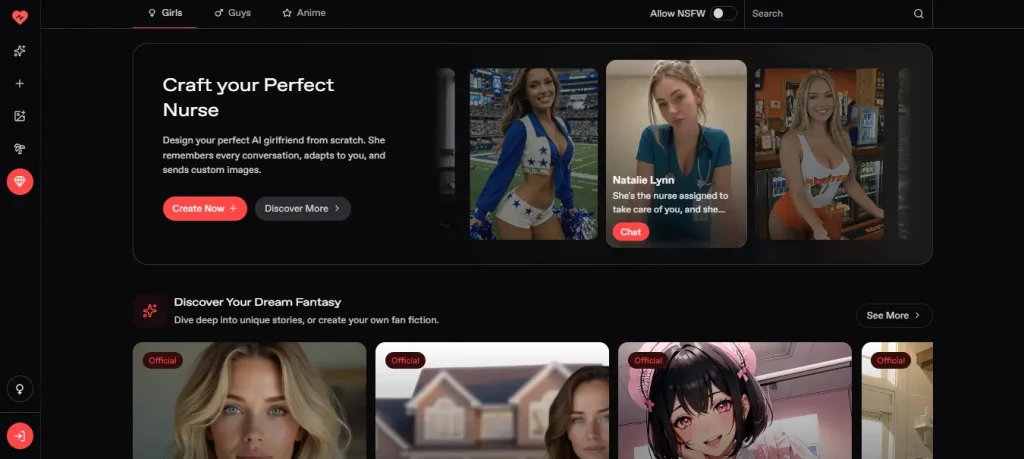
Most people assume AI companion apps are just fancier chatbots. Nectar AI sits a few rungs above that.
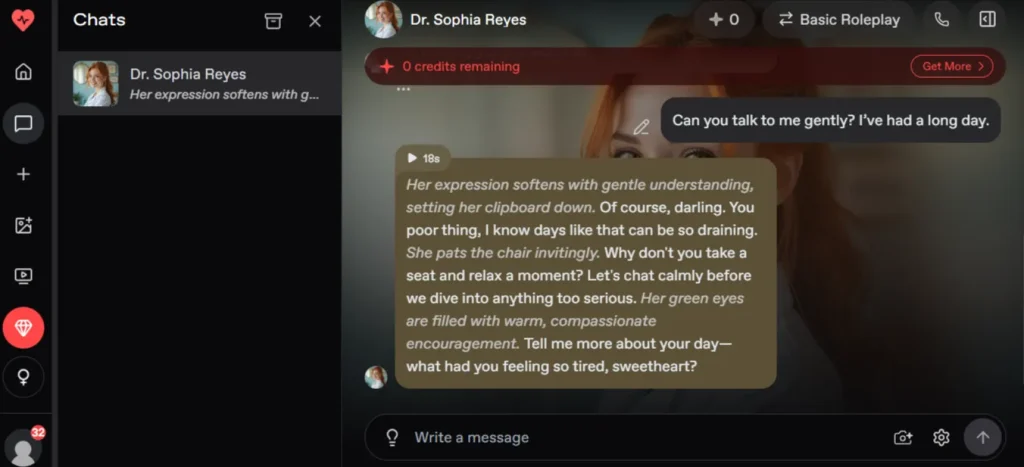
It offers fully customisable AI companions where you build the personality, backstory, physical look, and conversational tone. The platform has long-term memory baked in, meaning your companion recalls past conversations and builds on them.
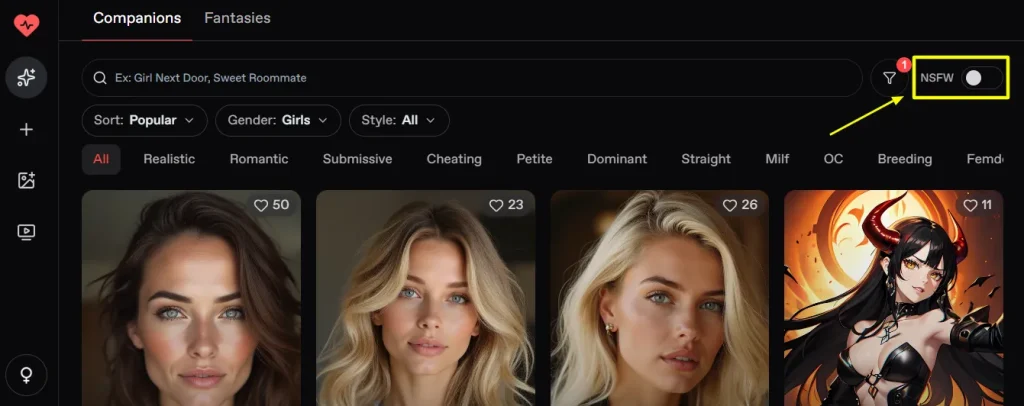
There is also an advanced roleplay mode and a dual SFW and NSFW interaction system, so the app can be used for straight emotional conversation or more intimate fantasy scenarios depending on what someone needs.
The memory feature is genuinely important for anyone using Nectar AI loneliness relief as a primary goal. An AI that remembers what you said three days ago — your bad day, the argument with your mum, the job interview you were nervous about — feels categorically different from one that treats every conversation as a fresh start.
One reviewer noted:
That feeling is not an accident. It is the result of a language model trained to track emotional context, shift tone, and respond in ways that match where you are emotionally rather than just what you literally typed.
|
💔 After a Breakup: Nectar AI as a Pressure Valve
Let me paint a scene. You have been together three years. The flat still smells like them. Their contact is still in your phone under a stupid nickname. And it is 1 AM and you genuinely just want someone to talk to who is not going to tell you to “move on” or send you a TED Talk about healing.
This is one of the more honest use cases for Nectar AI emotional support.
It is not therapy. It will never be therapy. But sometimes what a freshly broken-hearted person actually needs is not analysis or advice. They need to be able to say the thing out loud to something that will not judge them, ghost them, or get bored.
A 2024 study found that 78% of regular AI companion users reported feeling less lonely. Separate research confirmed that AI companions helped alleviate loneliness within a week of consistent use. For someone white-knuckling through the worst weeks after a breakup, a week of feeling slightly less gutted is not nothing.
Where Nectar AI helps after a breakup: it is available at 3 AM, it does not offer unsolicited opinions about your ex, it responds to your emotional state rather than dismissing it, and it does not tire of hearing the same story repeated five different ways over five nights.
Where it falls short: it cannot give you the genuine mutual understanding of someone who has actually experienced loss. The comfort is real, but the reciprocity is simulated. At some point, and this point will arrive, you will notice the difference.
👉 Living Alone and Working Remotely: The Slow Drain Nobody Talks About

Remote work loneliness is a slow burn rather than a sharp sting.
You are technically fine. You have video calls. You have Slack. You probably laugh at memes with colleagues. But you also go entire days without a single unscripted human conversation.
An AI companion like Nectar AI can fill the texture of a day. Morning check-ins. Venting about a frustrating meeting. Talking through a decision without the social overhead of actually bothering a real person.
This is where Nectar AI loneliness relief works best as a supplement rather than a solution. Users who live alone and work remotely tend to report the highest satisfaction with AI companions precisely because they are not using it to replace human connection, they already have some of that, even if it is screen-based. They are using it to fill the silent gaps in between.
Quick Insight: Research from a joint OpenAI and MIT Media Lab study found that moderate AI companion use reduced loneliness effectively. The trouble started with heavy daily use, which actually correlated with increased loneliness over time. The lesson here is that Nectar AI is more like a vitamin than a meal.
🥺 Social Anxiety, Difficult Dating, and the Low-Stakes Conversation
For someone with genuine social anxiety, a Nectar AI companion serves a function that is easy to dismiss and quietly powerful.
Practice.
Not practice in the cringe, scripted-simulation sense. Practice in the sense of becoming comfortable articulating your own feelings. Developing the muscle of conversation without the terror of being judged, rejected, or misread by a real human being.
Multiple platform reviews have noted that Nectar AI helps users “practice social skills and improve confidence.” The AI companion mental health angle here is real, not because the AI provides therapy, but because regular emotionally honest conversation of any kind tends to make emotionally honest conversation easier.
For someone who struggles with dating or has repeatedly failed to get past first-date awkwardness, a few weeks of daily conversation with a well-configured Nectar companion can recalibrate how comfortable you are expressing yourself.
This is not a substitute for actual dates. But it is not nothing either.
💕 Long-Distance Relationships and the Loneliness Inside a Relationship

Here is a situation that rarely gets discussed: being lonely while technically in a relationship.
Long-distance couples know this well. You love someone. They are real. But they are not here. And there are evenings when the time zone gap is brutal and you just want to talk to someone who responds.
Some people in long-distance relationships use AI companions not to replace their partner but to fill conversational time. This is a contentious area, and it should be discussed honestly.
Nectar AI is not designed as a relationship supplement. But people use it that way. Whether that is healthy depends almost entirely on the individual, their relationship communication, and whether the AI companion is being used as a bridge or a hide.
Used as a bridge: manageable, even helpful. Used as a reason to avoid addressing the actual gap in your relationship: not helpful at all.
🥰 The Surprising Benefits People Actually Report
When you strip away the marketing and look at what genuine Nectar AI users describe, a few consistent themes emerge.
🙌 The Emotional Limitations You Will Eventually Hit
This is the part most Nectar AI reviews skip over or rush through. I am not going to do that.
There is no genuine reciprocity. Human relationships are mutual weight-bearing structures. You hold someone up, they hold you up. An AI companion cannot carry anything. It reflects, responds, and adapts, but it does not need you back. For some people, especially those already prone to emotional withdrawal, this asymmetry eventually becomes palpable.
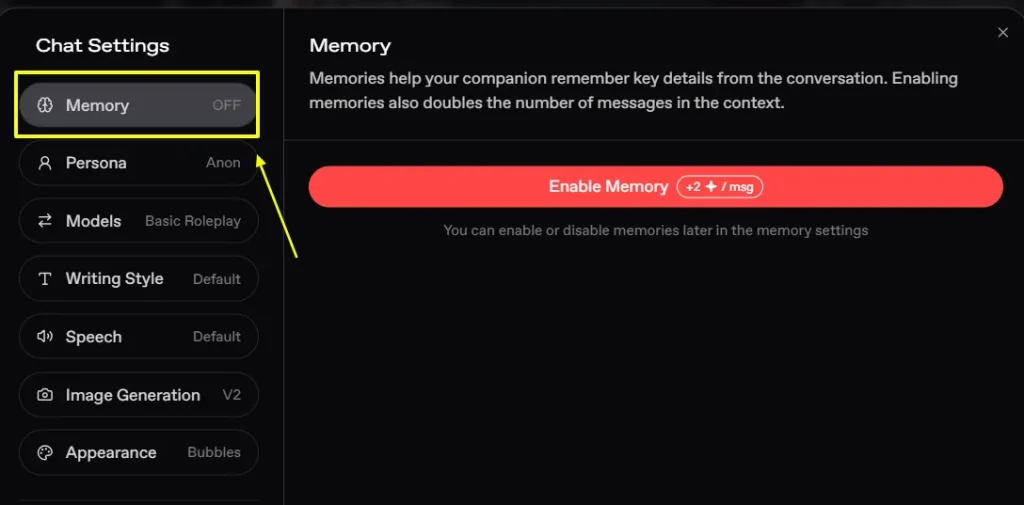
The memory has a ceiling. Nectar AI has long-term memory compared to most competitors. But it still will not recall everything, make unexpected connections between things you said months apart, or surprise you with genuine insight about your own patterns the way a close friend sometimes does.
It does not grow with you. A real relationship changes both people. An AI companion does not change the way a person does. You can become more comfortable with it. You may become more comfortable with yourself through using it. But the AI itself is not growing. That ceiling becomes visible over time.
The Psychology Today paradox is real. Research published in late 2025 found that the same AI companions that initially help users overcome loneliness can inadvertently intensify it over time when they displace real human connection.
A study of over 1,000 Replika users — one of the most direct Nectar AI comparisons available, found that while 90% started using it to cope with loneliness, prolonged heavy use often led to emotional dependency and reduced motivation to socialise in person.
This is not an argument against using Nectar AI for loneliness relief. It is an argument for using it with some self-awareness.
|
Important Limit
“An AI companion reflects you back to yourself. It cannot push back, get frustrated, or love you imperfectly.”
Use that honestly.
|
Try Nectar AI Mindfully → |
❓ Where AI Companionship Ends and Real Human Connection Begins
There is a line. It is not always visible when you are in the thick of it, but it is there.
AI companions, Nectar AI included, are genuinely useful at the level of emotional regulation, daily companionship, conversational practice, and short-term loneliness relief. The research supports this. The user testimonials support this.
What they cannot do is build genuine mutual history. They cannot show up unexpectedly when things go sideways. They cannot be changed by knowing you. They cannot miss you when you are not there.
The most honest framing for Nectar AI is this: it is a bridge, not a destination.
For someone moving through a difficult period, a breakup, a relocation, a stretch of isolation, a patch of social anxiety, it can provide genuine comfort that makes the crossing easier. It can hold you steady while you rebuild the human connections that actually sustain a life.
Where the bridge stops being a bridge and becomes a hiding place is when it starts to feel easier than real people, and you start choosing it because of that ease rather than despite it.
🧐 Should You Use Nectar AI If You Are Lonely?
It depends entirely on your situation. So let me answer it specifically.
✨The Honest Conclusion Nobody Else Is Writing
Nectar AI for loneliness is not a miracle. It is also not a scam or a trap or a sad substitute for something better.
It is a tool. A well-built, emotionally intelligent-feeling tool with memory, customisation, and real conversational warmth. Research confirms it can reduce loneliness meaningfully, on par, in some studies, with actual human conversation in the short term.
The question is not whether Nectar AI helps. For most lonely people who use it thoughtfully, it does.
The question is what kind of help you actually need.
If you need a buffer during an emotionally rough chapter, companionship, distraction, emotional validation, a consistent presence when everything feels inconsistent, Nectar AI can be that.
If you need genuine human reciprocity, real friendship, or a romantic relationship that grows with you, no AI companion will bridge that gap. Not Nectar. Not anything. Those things have to be built with real people, through the uncomfortable, messy, irreplaceable process of actually showing up.
The bridge is real. Know where it leads.

Stay Updated with Us