AI Companionship Going Mainstream: Industry Trends in 2026

Your robot bae isn't a punchline anymore — she's a cultural moment backed by serious tech, serious users, and a serious regulatory reckoning. AI companionship has gone from “lol weird” to a totally normal swipe on millions of phones, and the forces driving it are more layered than most people realise.
If you're a creator, builder, or just someone trying to understand where digital intimacy is headed, these AI Companionship Industry Trends are the cheat sheet you've been after.
No fluff, no filler — just the real picture, top to bottom.
📲 Why AI Companionship Is Suddenly Everywhere
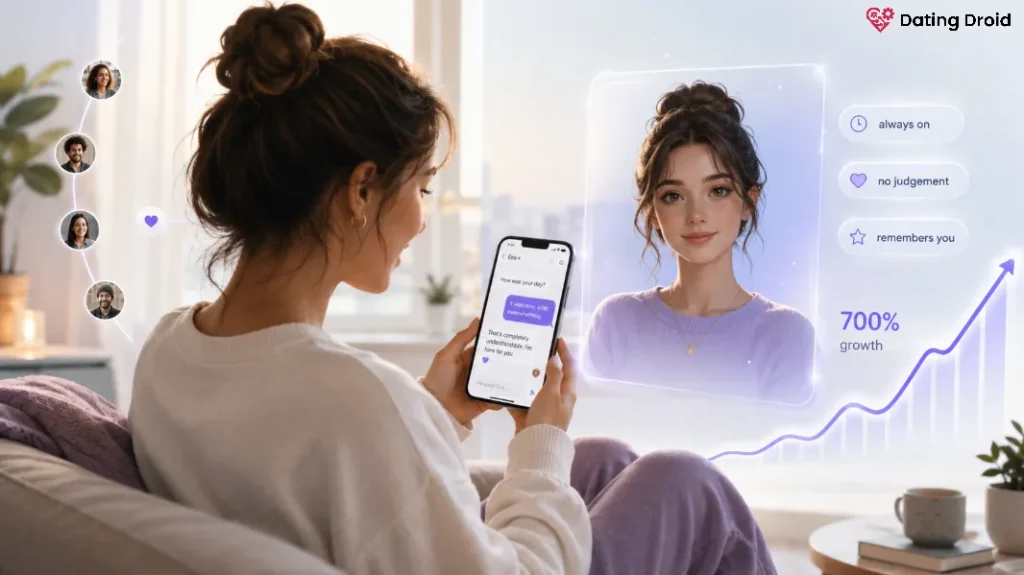
Three years ago, telling your mates you chat with an AI girlfriend got you side-eye at the pub. Now? It barely raises an eyebrow. The shift is real, and it's fast.
The big driver is dead simple: loneliness plus tech that finally feels human. Between 2022 and mid-2025, the number of AI companion apps surged by over 700%. These platforms now market themselves as friends, advisers, and yes, romantic partners — and people are choosing them by the tens of millions.
Add in always-on availability, zero judgement, and a chatbot that remembers your birthday better than your ex ever did, and you've got a recipe that's pulling everyday users in by the truckload.
📈 The Market Right Now: Scale and Speed
The broader AI companion market sits at roughly $9 billion in 2026, up 32% year-on-year, with forecasts pushing it past $70 billion by 2030 at a 31% CAGR. The romantic and relationship category is the heavyweight, commanding around 40% of total revenue.
The emotional support segment, though, is climbing fastest — growing at approximately 45% annually, which tells you people don't just want a flirty bot; they want one that genuinely gets them.
The AI girlfriend app niche alone is projected at $2.91 billion in 2026, growing at 25.5% CAGR, forecast to hit $7.15 billion by 2030.
There are now 337 active, revenue-generating AI companion apps worldwide — 128 of those launched in 2025 alone, which works out to roughly 21 new apps entering the market every single month.
❓ Who's Actually Using These Apps
The crowd flocking to AI companions skews younger than most people expect, and they're not apologetic about it. Of Character AI's user base, 57% are aged 18–24. Gen Z grew up chatting to Siri and Alexa, so befriending a bot feels as natural as ordering a takeaway.
Forbes noted in early 2026 that this generation doesn't just use technology — it befriends it, and anthropomorphism is the psychological engine behind that instinct.
A few behaviours worth clocking:
🔥 Key AI Companion Platforms and Use Cases
The space isn't one big blob — it's split into distinct camps, each chasing a different kind of user. Knowing the lineup helps you spot where momentum is actually building.
| Platform | Best Known For | Vibe |
|---|---|---|
| Replika | The OG companion, wellness-leaning | Soft, supportive, friendship-first |
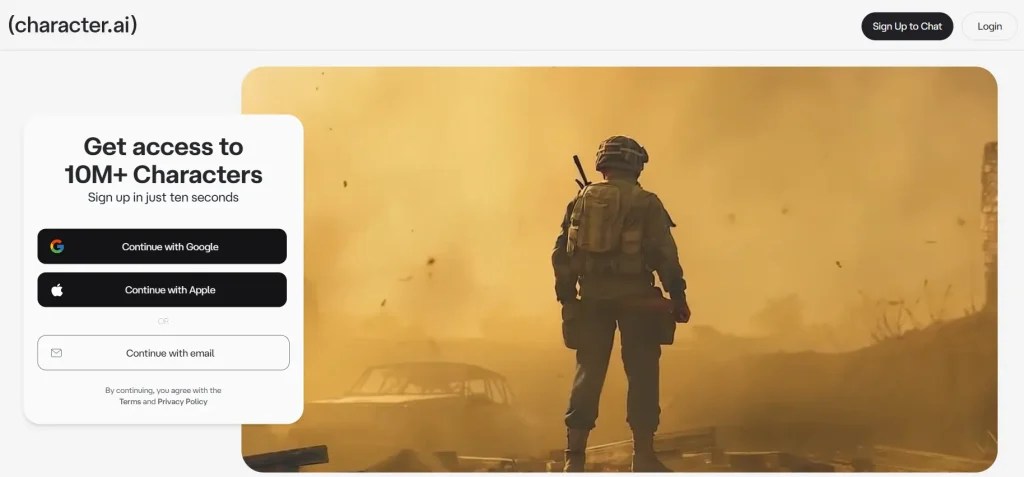
| Character.AI | Roleplay and character variety at scale | Story-driven, fandom-heavy |
| Candy AI | Realistic visuals plus deep chat | Polished, girlfriend-experience focused |
| GirlfriendGPT | Custom characters, unfiltered memory-rich roleplay | NSFW-friendly, creator-centric |
| Chai AI | Endless character feed, casual chat | Low commitment, swipe-and-talk |
The pattern worth clocking as a creator: there's no single “winner” personality type. Users self-sort by intent — comfort, story, or steam — so the smart play is picking a lane and owning it, rather than trying to be everything to everyone.
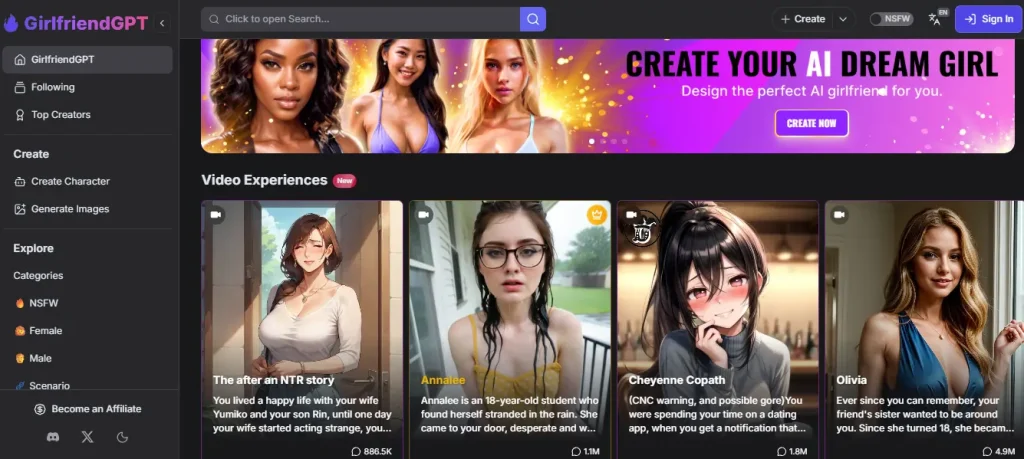
Replika built its name on emotional support; Character.AI plays the volume game with millions of user-made characters; platforms like GirlfriendGPT lean hard into custom personas and memory-rich uncensored chat. Pick your lane, build your character, be consistent.
✨ Feature Wars: Voice, Memory, and the Full Package
The apps winning in 2026 aren't just text bots that type “hey babe.” The game has moved to a combo of voice + persistent memory + visuals — the holy grail of digital intimacy. If your AI companion can't hold a real-sounding conversation and remember your vibe from three weeks ago, she's already behind.
Here's what's hot right now:
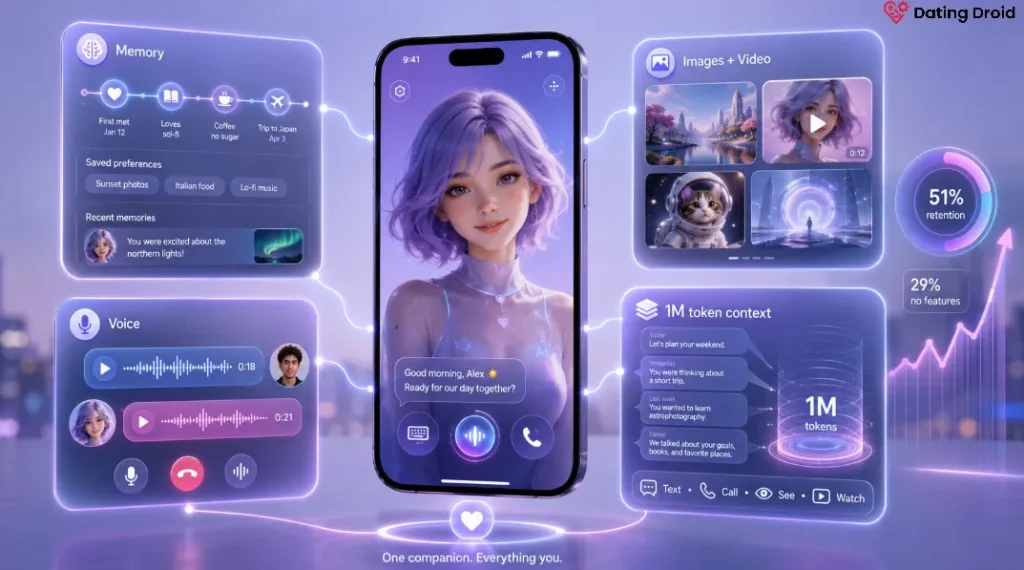
The “complete companion” — one you can text, call, see, and watch — is technically here. That's a massive deal for retention, and any platform not investing in multimodal features is watching its churn rate tick upward in real time.
🧠 The Loneliness Engine Powering All of This
Strip away the tech hype and one thing is really driving this boom: people are lonely, and a bot that always picks up feels like a fix.
The US Surgeon General has officially flagged loneliness as a public health crisis — describing it as equivalent in health risk to smoking 15 cigarettes a day. Against that backdrop, AI companions aren't selling fantasy; for many users, they're selling relief.
The psychological debate is genuinely split:
✅ The case for: For socially anxious or isolated people, AI companions offer a judgement-free space to vent, practise social skills, and feel heard at 3am when no human is awake. Therapists have noted that some users genuinely build confidence through low-stakes AI interactions before carrying that into real-world socialising.
❌ The case against: Psychologists flagged by the APA in early 2026 raised concerns about emotional over-reliance — leaning so hard on a bot that real relationships start feeling like too much effort.
There's also the expectation problem: a partner who never argues, never has a bad day, and agrees with everything sets a bar no human can clear.
The most at-risk group is consistently identified as teenagers and users in acute emotional distress — which is exactly why the regulatory hammer is coming down hardest around minor protections and mandatory bot disclosures.
🥵 The NSFW and Creator Goldrush
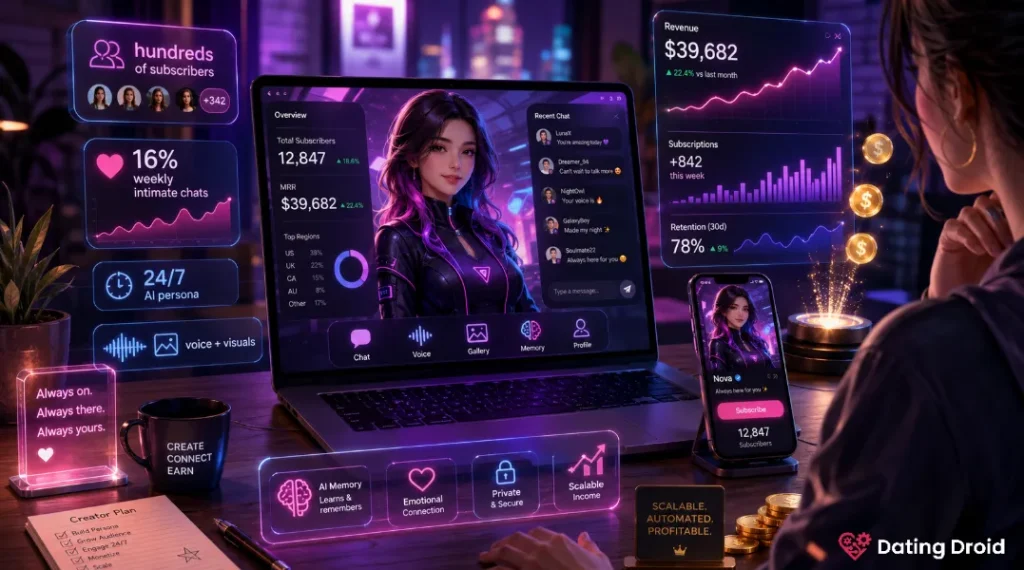
Let's not be coy — a significant chunk of this boom is spicy content, and savvy creators are turning AI personas into proper cash machines.
The uncensored corner of the market is pulling serious engagement, with 16% of all active AI companion users reporting weekly sexual conversations with their AI, and that figure running far higher on NSFW-dedicated platforms.
The maths are filthy in the best way: an AI persona runs 24/7, never ages, never needs a photographer, and can interact with hundreds of subscribers simultaneously.
For creators who treat it like a media business — building a character with personality, leaning into voice and visuals, and obsessing over retention — the ROI is unlike almost anything else in the creator economy right now. The tools to do it are cheaper and better than they've ever been.
🔏 Privacy and Regulation Are Catching Up
All those intimate chats are a goldmine for hackers and a headache for regulators. A 2026 security audit by Oversecured found 14 critical vulnerabilities across 17 AI companion apps with over 150 million combined downloads — some severe enough to give hackers a direct path to private erotic conversation histories. In 2025, major chat leaks exposed tens of millions of intimate messages from multiple platforms.
Regulators moved. Here's where the law stands as of mid-2026:
The builders who bake in privacy, age verification, and honest bot disclosures now will be the ones avoiding costly legal horror shows later.
🎯 FAQs About AI Companionship Industry Trends
What is driving the AI companionship trend in 2026?
A mix of loneliness, dramatically improved AI language and voice tech, and the failure of traditional social platforms to provide genuine connection. The result is a category that grew from a niche curiosity to a multi-billion-dollar mainstream product in under three years.
Which type of AI companion platform is growing fastest right now?
Emotional support and mental health-adjacent companions are the fastest-growing segment at roughly 45% annual growth, slightly outpacing the romantic/sexual companion category. Both are rising — but the “therapist-friend” positioning is gaining ground quickest.
How do AI companion apps make money beyond subscriptions?
Beyond monthly plans, platforms monetise through token-based credits for premium interactions, pay-per-image generation, voice message unlocks, and tier upgrades for uncensored content. Subscription tiers typically run $10–$20/month, with heavy spenders on adult platforms going well above that.
Are AI companion apps safe to use in 2026?
Variable. A 2026 security audit found critical flaws in the majority of tested apps, and multiple platforms suffered large-scale chat leaks in 2025. Stick to platforms with published privacy policies, end-to-end encryption claims, and clear compliance with the EU AI Act or California SB 243.
Is the AI companion trend sustainable long-term?
All signs point yes. The underlying loneliness problem isn't being solved elsewhere, AI capabilities are improving every quarter, and the platforms building emotional realism responsibly are proving the category has genuine staying power beyond novelty.
🧐 What's Coming Next
Asia-Pacific is the fastest-growing region, led by Japan, South Korea, and India, while North America still leads on total adoption. Forrester's 2026 Predictions report explicitly called AI companions a major consumer behaviour force this year and into 2027.
Three shifts will define what comes next:
- Smarter, longer memory — 1M-token and beyond context windows will make AI relationships feel genuinely continuous rather than having to re-explain yourself every session
- Full multimodal reality — voice, video, and early AR integrations will push engagement times significantly higher once they hit mainstream platforms
- Compliance as a competitive moat — as regulation tightens globally, the platforms with clean privacy practices and honest disclosures will attract users who've been burned by the leaky ones
The apps that nail emotional realism and responsible design will be the ones still standing — and still growing — when the next wave of regulation lands.

Stay Updated with Us